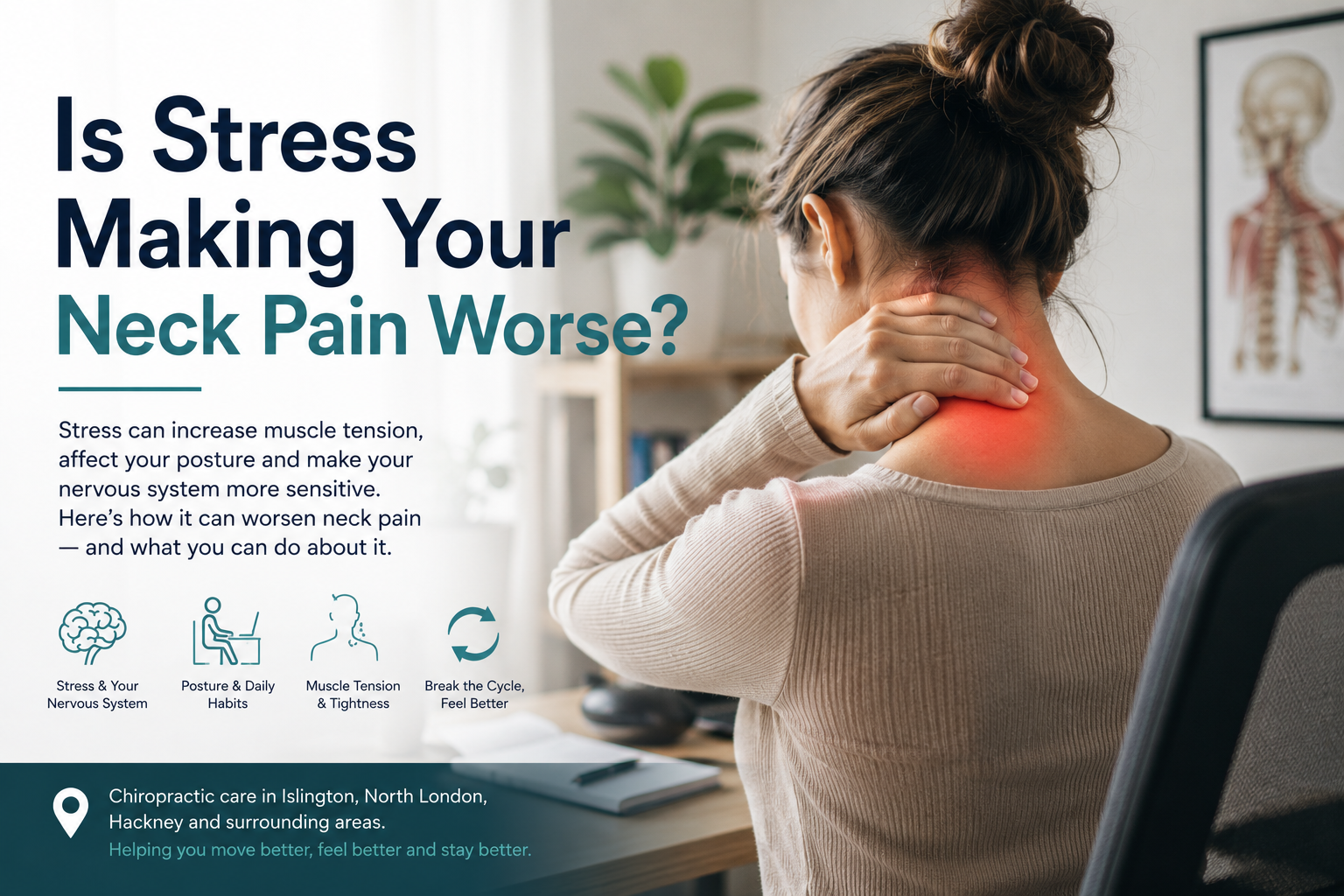
Is Stress Making Your Neck Pain Worse? | Chiropractor Islington, North London
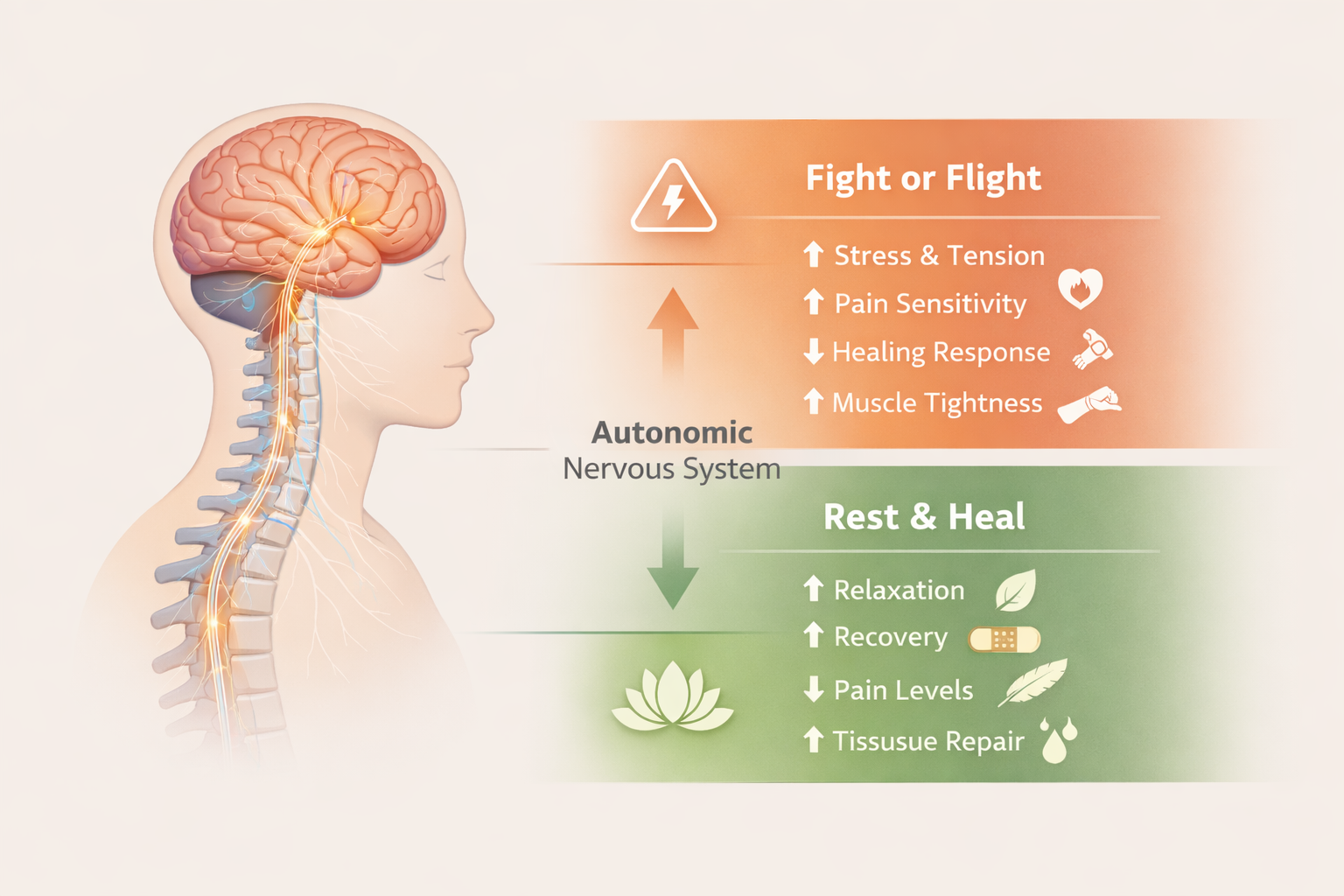
Stress doesn’t just affect your mind—it can also increase muscle tension, alter posture and make your nervous system more sensitive to pain. Discover why stress may be contributing to your neck pain and how chiropractic care, movement and simple lifestyle changes can help you feel and move better.
Read More
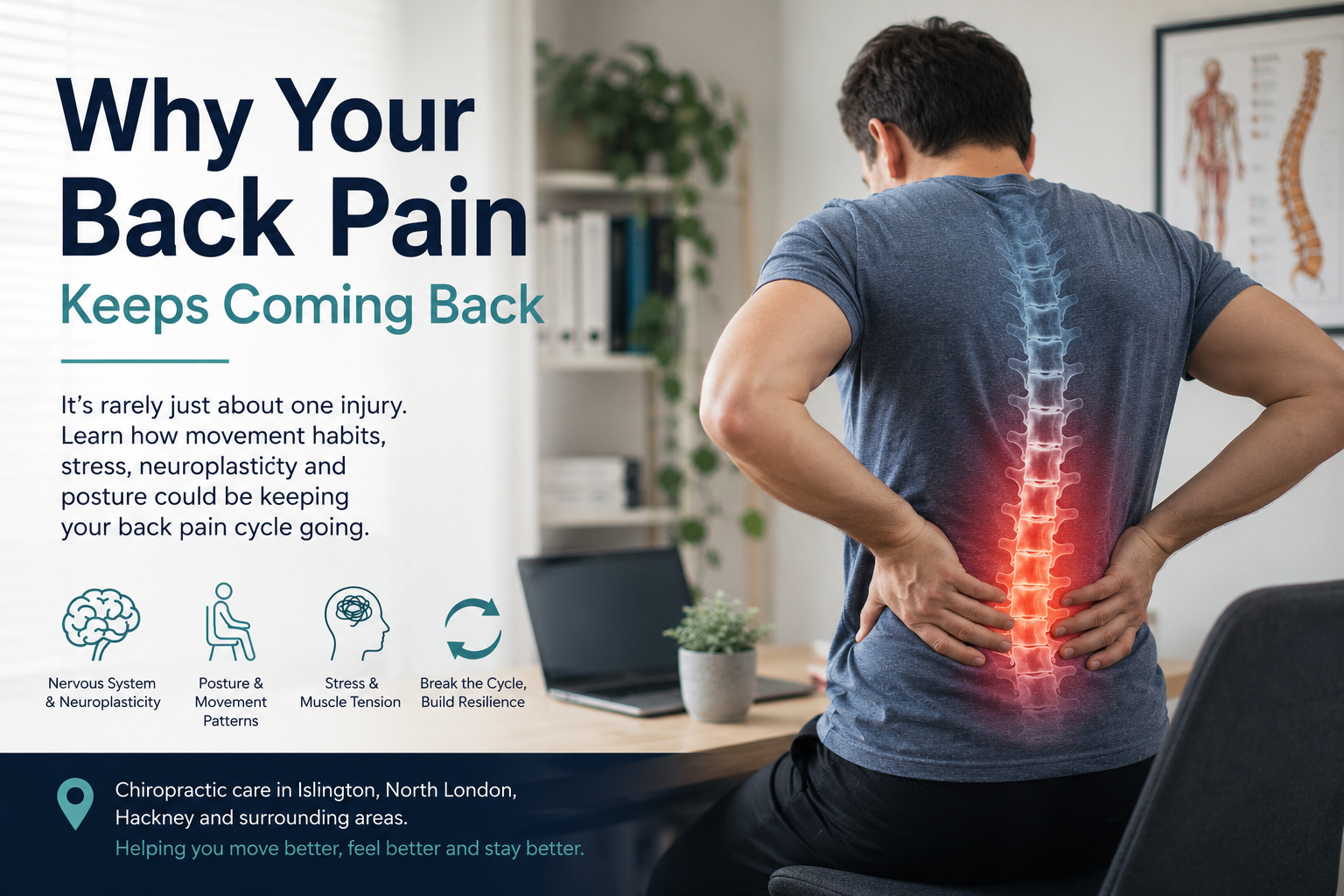
Why Your Back Pain Keeps Coming Back | Chiropractor Islington, North London
Recurring back pain does not always mean fresh damage. Learn how movement habits, stress, posture and neuroplasticity can contribute to repeated back pain flare-ups.
Read More
I Didn't Realise How Reactive I Was
How stress slowly becomes your “normal” why feeling reactive or overwhelmed isn’t always a personality trait
Read More
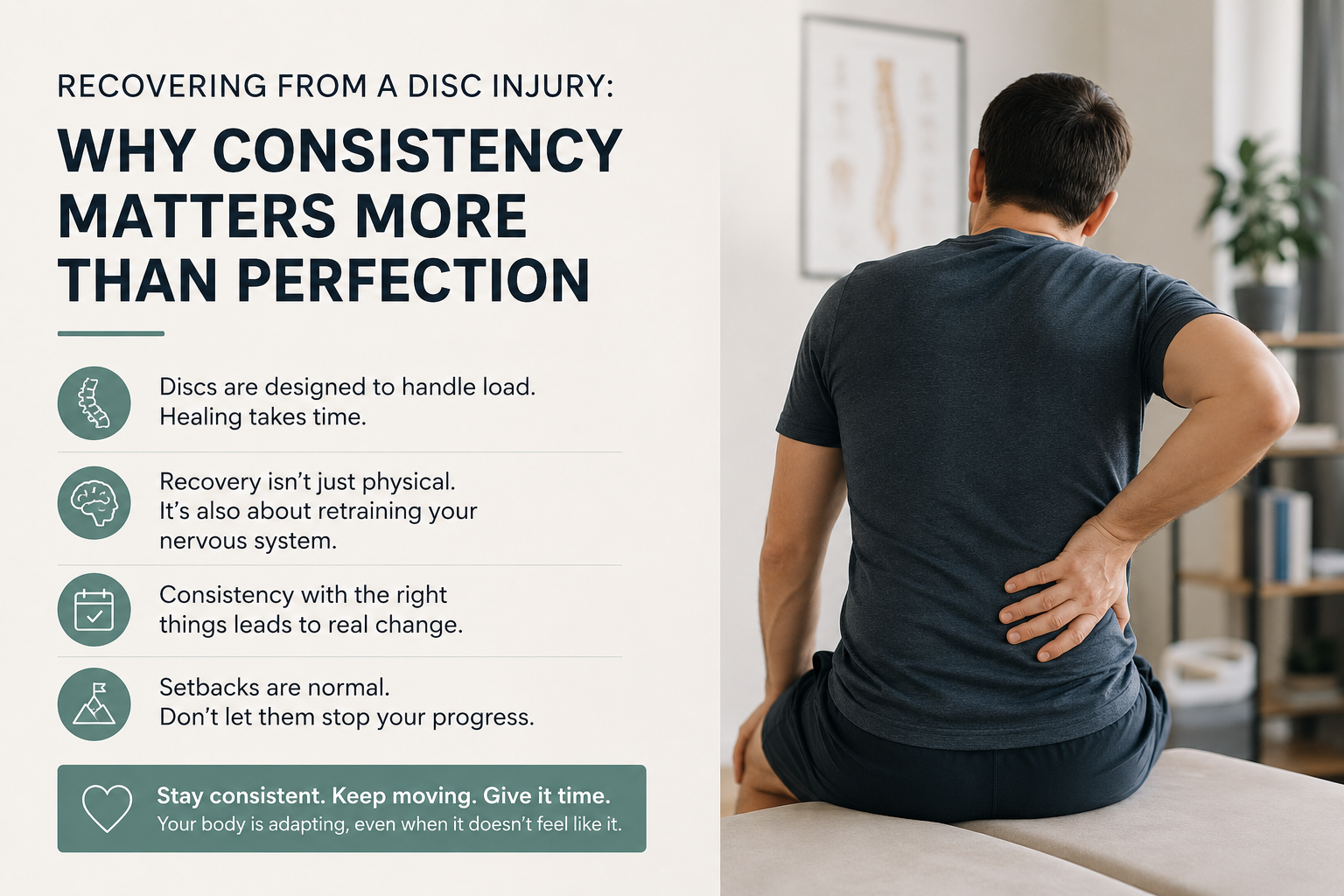
Recovering From a Disc Injury: Why Consistency Beats Perfection
If you’re going through disc injury recovery, you’ll know—it’s rarely a smooth, straightforward process.
It’s not as simple as resting and waiting for it to heal. Most people experience a mix of progress, setbacks, and days where it feels like nothing is changing.
That’s normal—and it doesn’t mean you’re doing anything wrong.
Read More
Lower Back Pain When Sitting: Common Causes and What Can Help
If you’ve been less active recently, had an injury, or just haven’t loaded your body much, your back may become less tolerant to prolonged sitting.
That doesn’t mean it’s damaged—it may simply be less conditioned than it used to be.
Read More
Can Neck Pain Cause Headaches?
It’s something we see regularly at Angel Chiropractic—people dealing with recurring headaches who haven’t realised their neck may be contributing.
Not all headaches come from the neck, of course. But in some cases, neck joints, muscles, and surrounding tissues can refer pain into the head and trigger what are known as cervicogenic headaches.
Read More
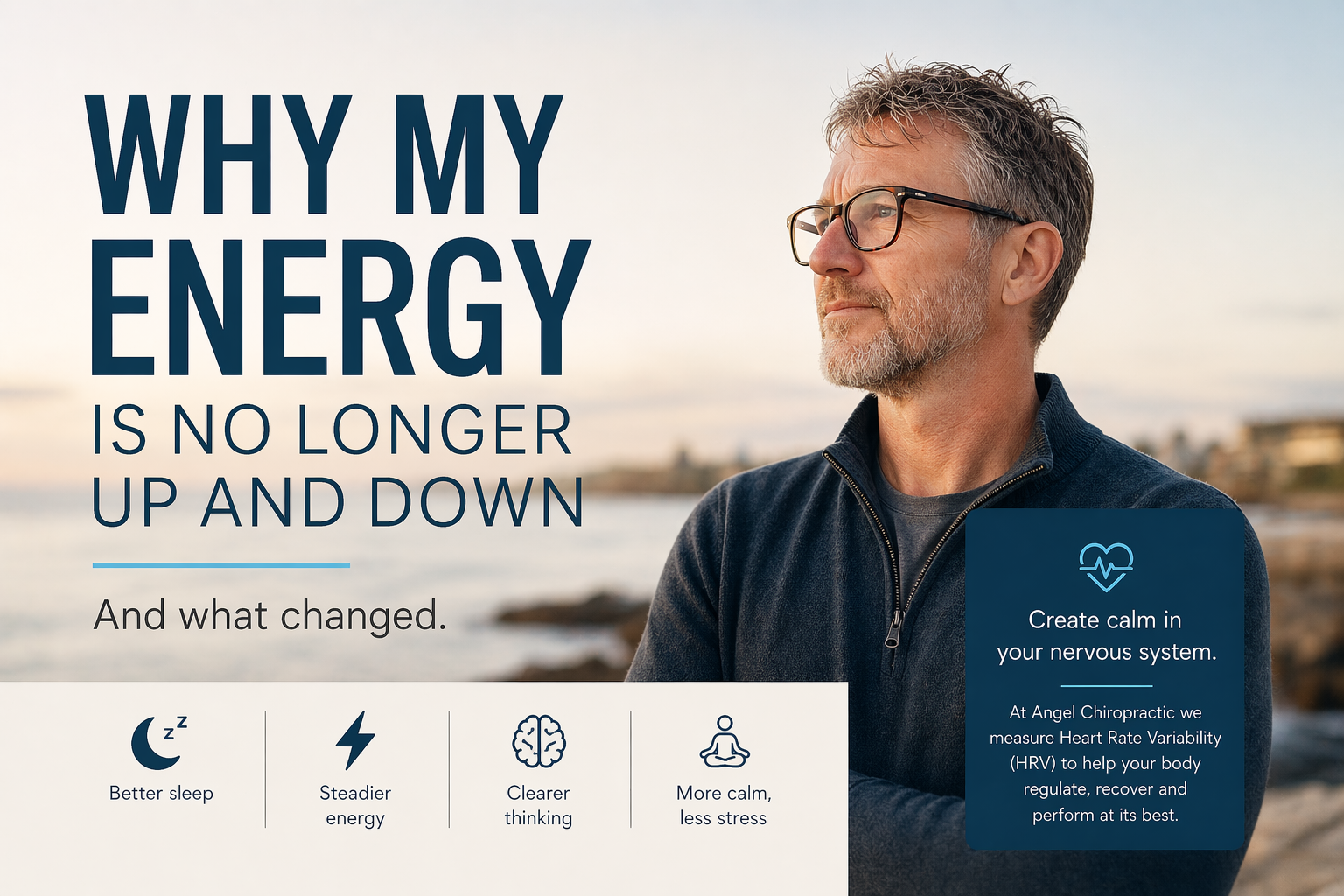
Why My Energy Is No Longer Up and Down (And What Changed)
My energy hasn’t suddenly become higher—it’s become more consistent.
Here’s what changed, why it matters, and how your nervous system might be playing a bigger role than you think.
Read More
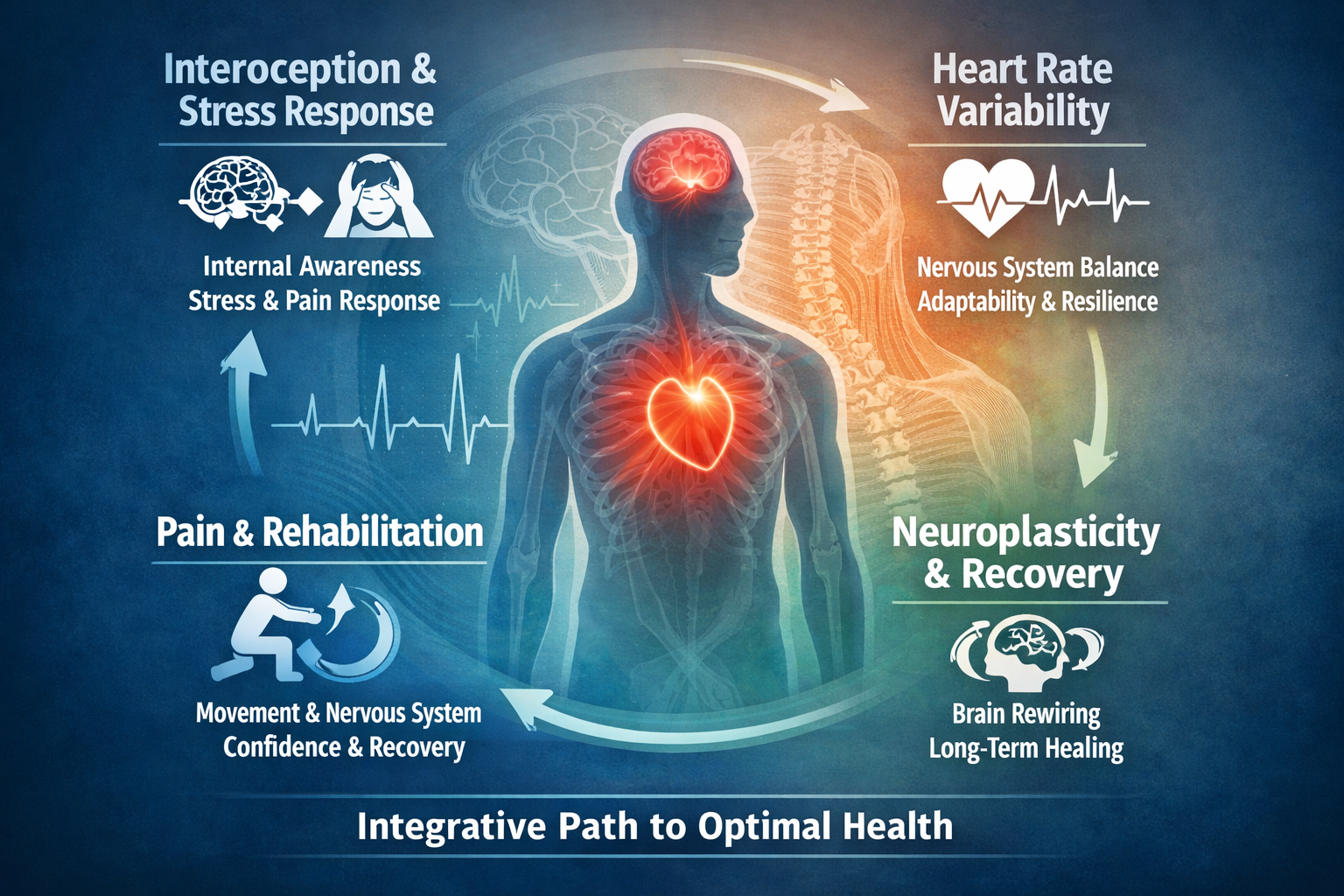
Interoception, Stress, and Recovery: An Integrated, Evidence-Based Approach to Pain
Pain isn’t always structural. Learn how stress, interoception, and heart rate variability influence recovery—and how a modern, evidence-based approach can help.
Read More
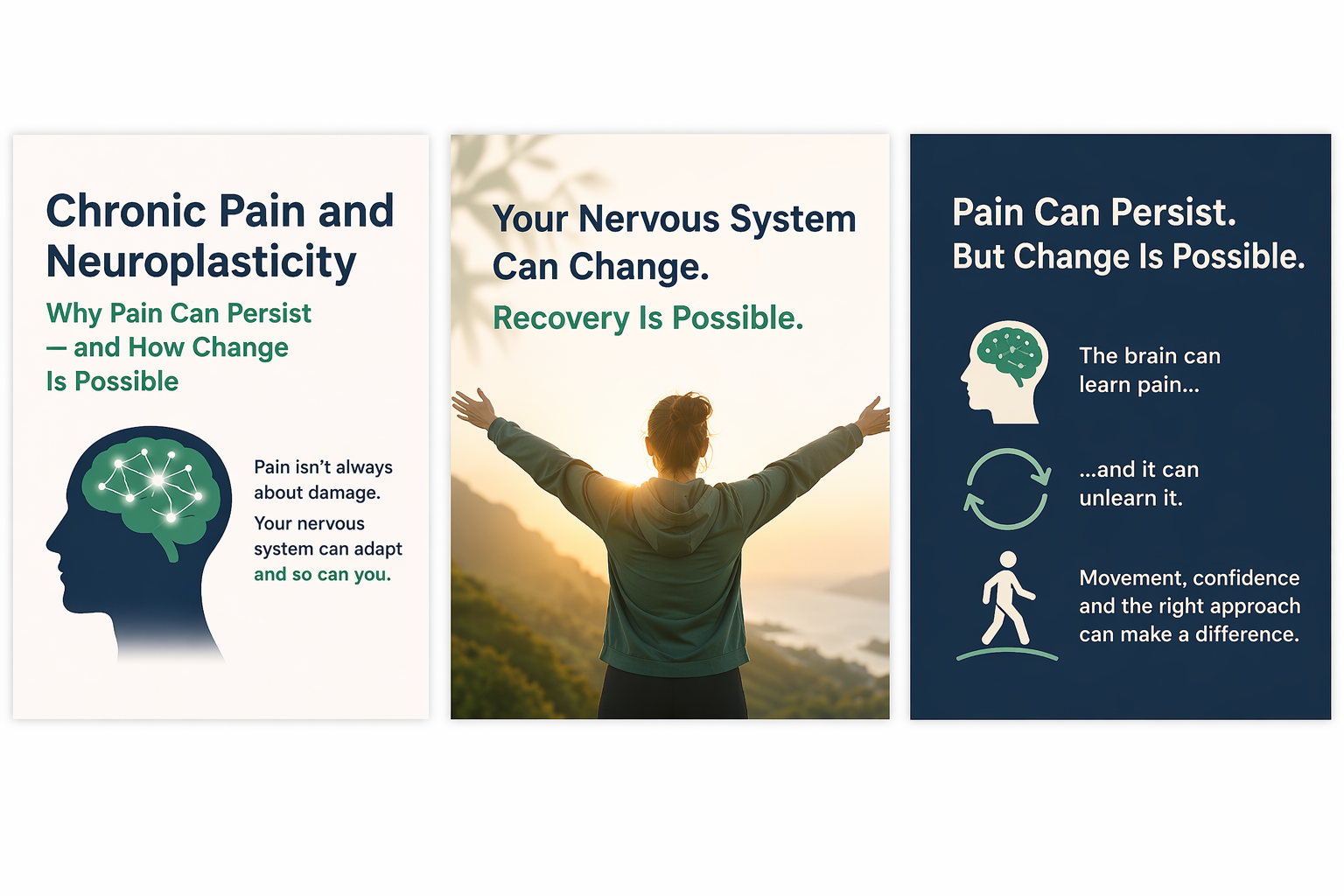
Chronic Pain and Neuroplasticity | Why Pain Persists & How to Recover | Angel Chiropractic
Chronic pain doesn’t always mean ongoing damage. Learn how neuroplasticity and nervous system sensitivity influence pain—and what evidence-based steps can help you recover.
Read More
Still Alcohol-Free in March: What 3 Months Without Drinking Has Done for My Health, Nervous System & Focus
If you read my previous post — “Why I Did Dry January (And What It Taught Me About Health & Momentum)” — you’ll know this started as a simple reset.
No big rules. No long-term commitment. Just curiosity.
Now it’s the end of March… and I still haven’t had a drink.
Read More
How to Improve Your Recovery
One of the most important things I explain to patients at Angel Chiropractic in Islington is this Recovery isn’t just about what treatment you receive—it’s about how well your body can respond to it. If your nervous system is more receptive, you will generally see faster, more consistent progress.
Read More
Why Some People Get Better… and Others Don’t
After more than 30 years working as a chiropractor, one pattern has remained consistent:Two people can walk into the clinic with very similar problems—back pain, neck pain, recurring injuries—and yet respond very differently to care. One improves steadily. The other struggles, plateaus, or takes much longer.
Read More
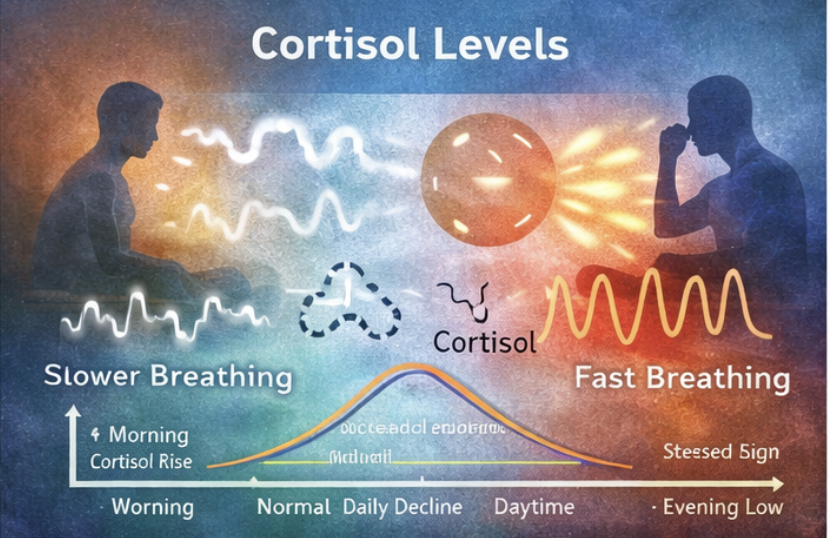
Breathing: A Direct Line to Your Brain and Stress Response
Breathing doesn’t exist in isolation. It’s influenced by posture, spinal movement, and how the body is functioning overall. Restricted movement—particularly through the rib cage and spine—can limit breathing efficiency. This feeds back into the nervous system and stress response.
Read More
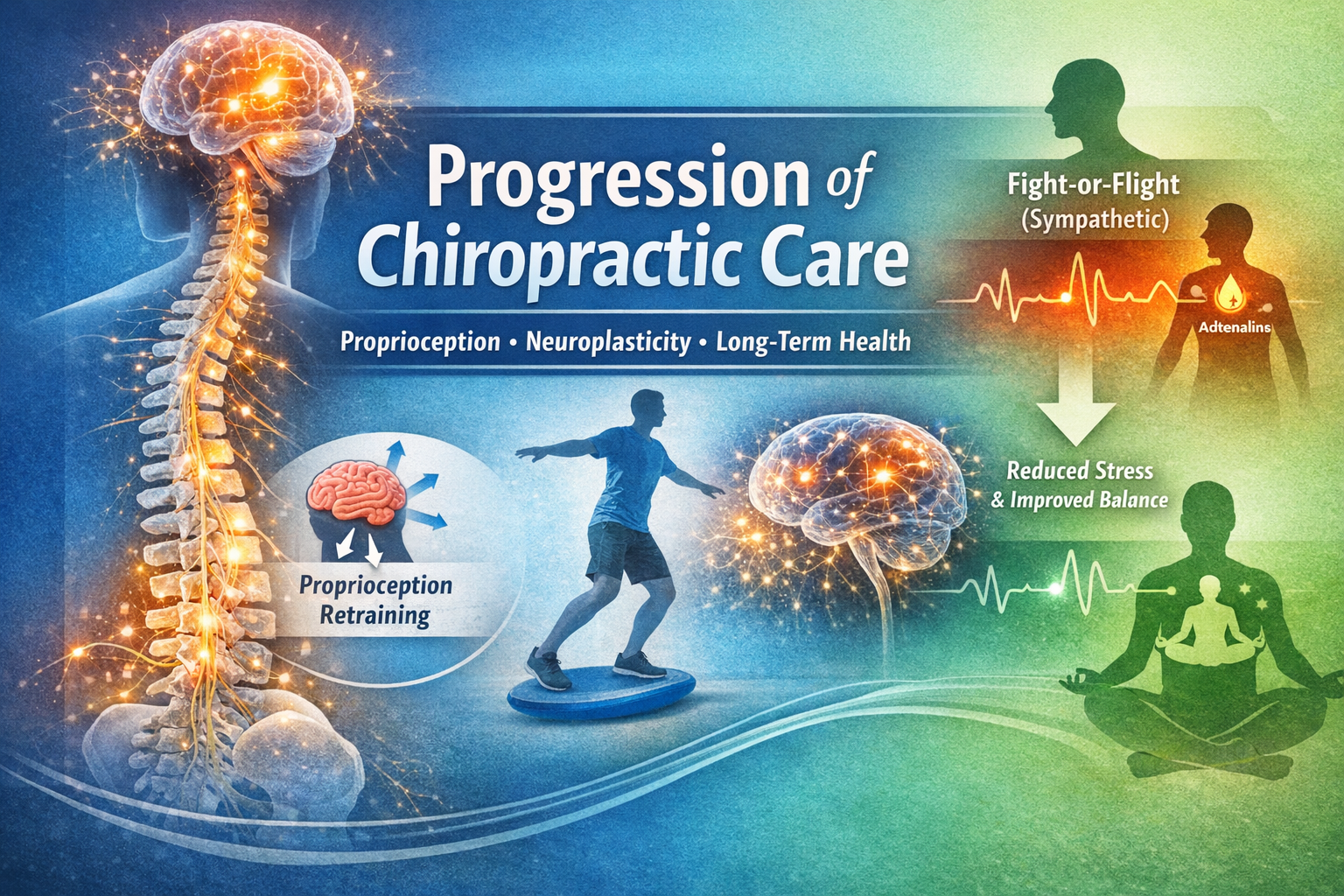
Why Chiropractic Care Is a Process, Not a Quick Fix
Healthy joints send clear, accurate signals to the brain. But when joints become stiff, irritated, or underused, this signalling can become less reliable.
This is where chiropractic care plays an important role.
Read More
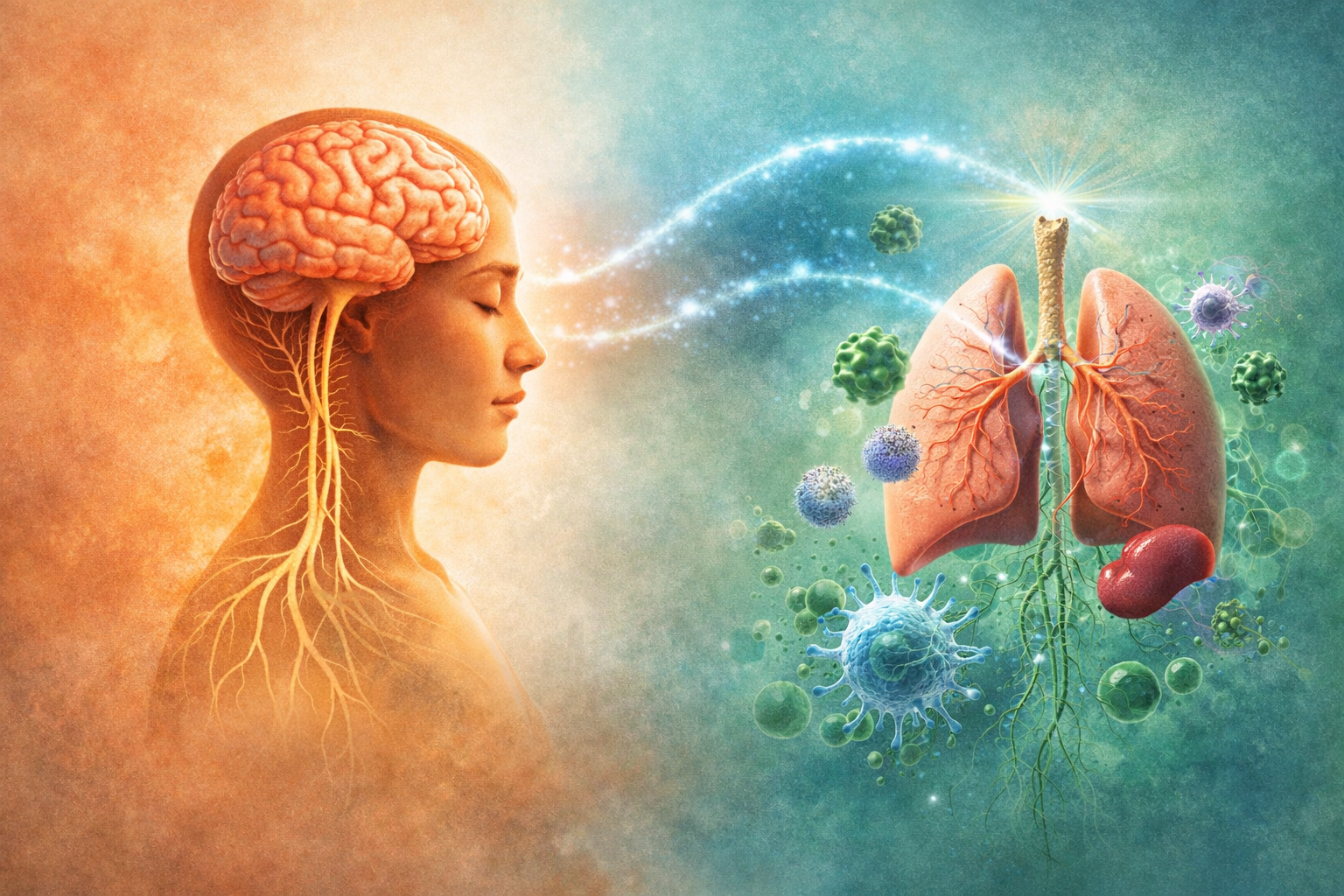
Meditation, the Immune System, and Cancer
At Angel Chiropractic in Islington, we take a whole-body approach to health. Rather than simply chasing symptoms, we focus on how the spine, nervous system, posture, and lifestyle factors interact.
Read More
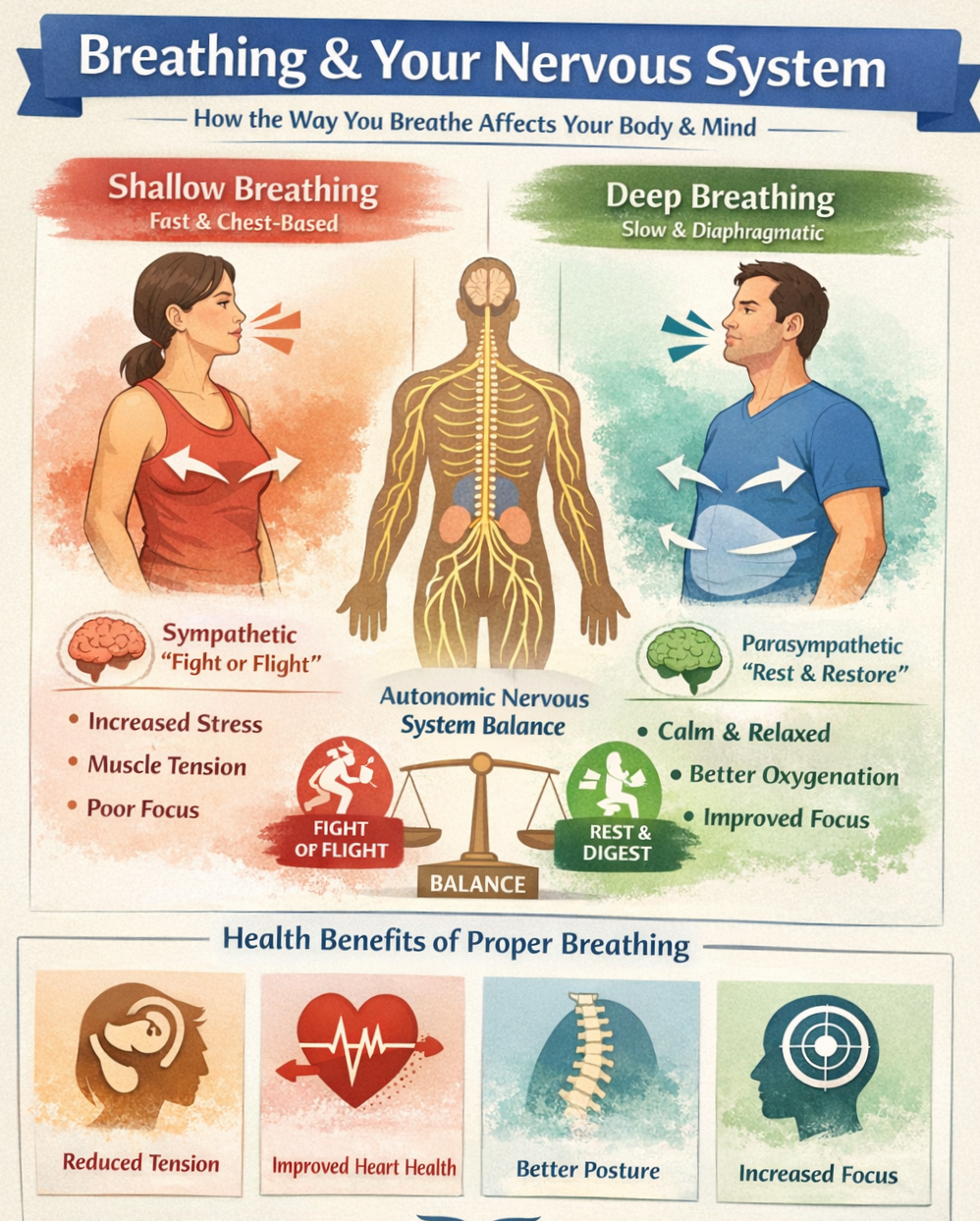
Breathing, the Nervous System, and Your Health
diaphragmatic breathing diagram and nervous system health
Read More
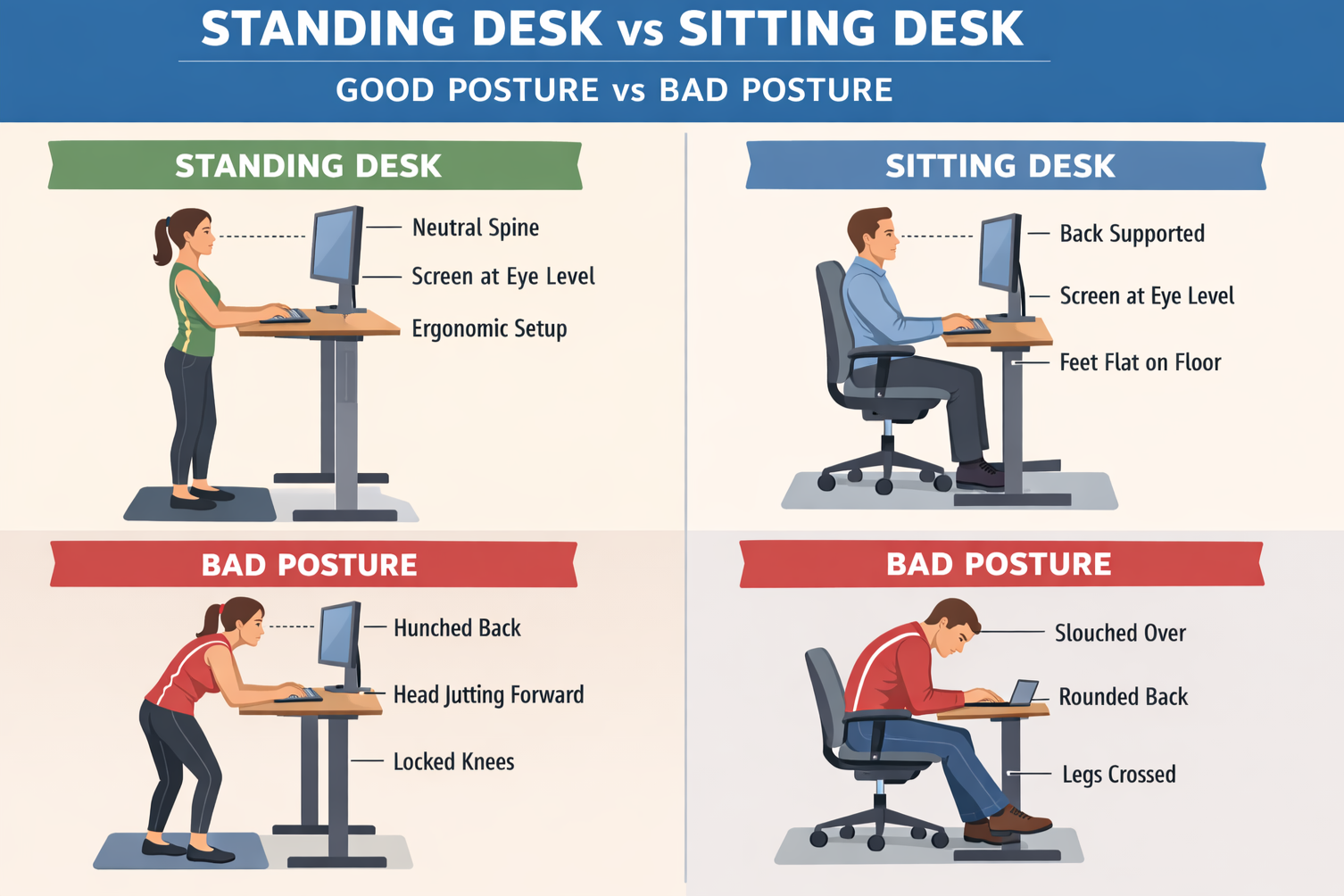
Standing Desks vs Office Chairs: Which Is Better for Your Spine?
Modern work has changed dramatically. Many of us now spend 6–10 hours per day at a desk, often in the same position for long stretches. Unsurprisingly, prolonged sitting is strongly associated with back pain, neck stiffness, fatigue, and reduced movement throughout the day.
Read More
How Long Does Chiropractic Care Take — and Why?
Chiropractic care is not a single event; it is a process of biological adaptation. The real question is less “How long does an appointment take?” and more “How long does it take the body and nervous system to adapt?”
Read More
Is Chiropractic Safe?
For most people, chiropractic is considered low-risk when delivered by a properly trained and registered professional for appropriate musculoskeletal conditions.
Read More