
Fibromyalgia Treatment in Islington | Angel Chiropractic | 30 Minute Meditation
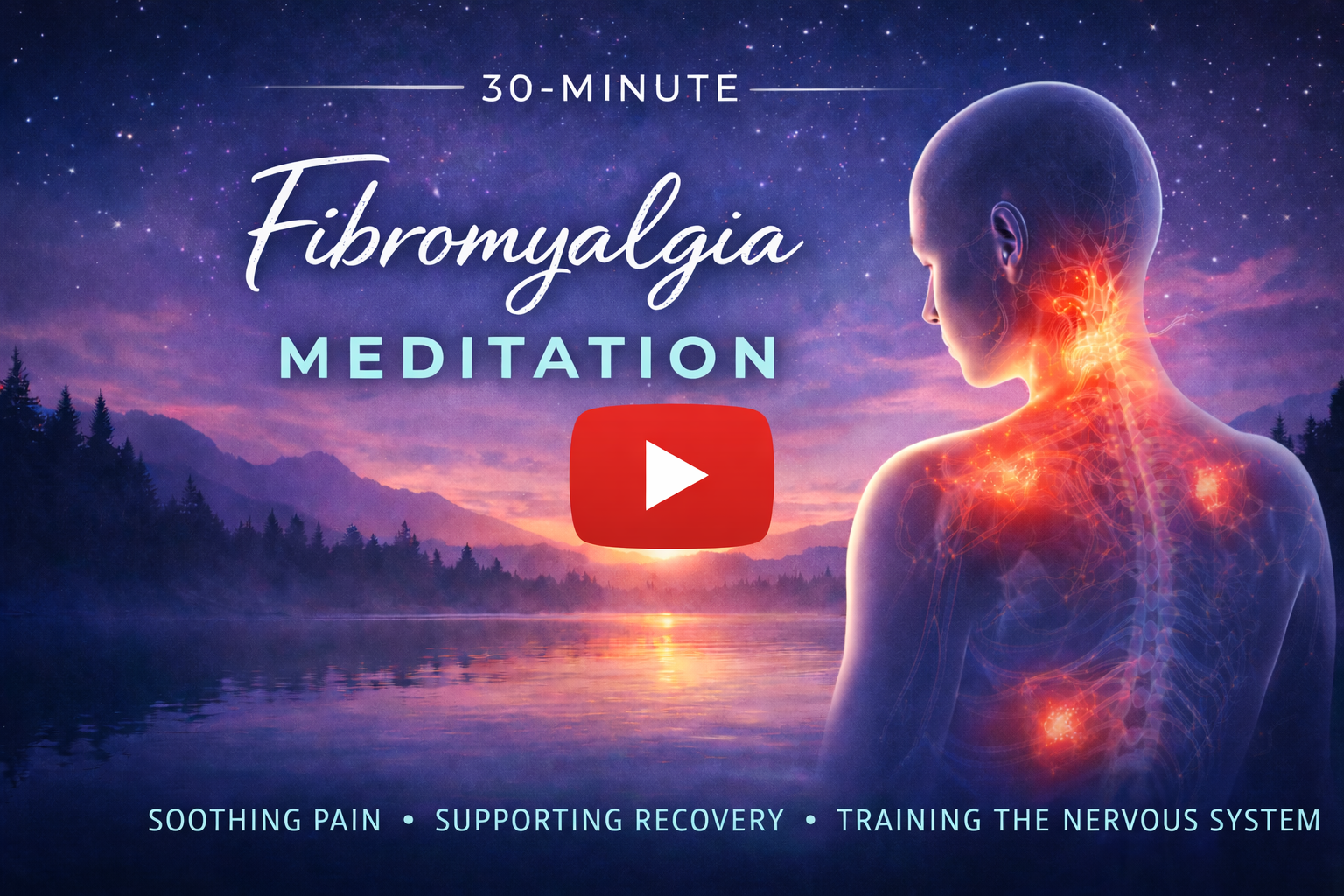
Fibromyalgia can feel overwhelming.
Widespread pain.
Fatigue.
Sleep disturbance.
Brain fog.
Many people are told there is “nothing structurally wrong” — yet the pain is very real.
At Angel Chiropractic in Islington, we take a modern, neuroscience-based approach to fibromyalgia, focusing on nervous system regulation, neuroplasticity, and restoring balance to an overprotective pain system.
Understanding Your Fibromyalgia Meditation Practice: Neuroplasticity, Central Sensitisation & the Vagus Nerve
1. Why This Meditation Is Different
This meditation is not about “thinking your pain away.”
It is not about ignoring symptoms.
And it is not suggesting your pain is psychological.
Fibromyalgia pain is real.
What this practice targets is the nervous system processes that amplify pain — particularly central sensitisation and threat detection pathways in the brain.
Modern pain science shows:
The brain predicts and regulates pain
The nervous system can become sensitised
Sensitisation is reversible
The brain is capable of change (neuroplasticity)
This meditation is structured to gently retrain those systems.
2. What Is Happening in Fibromyalgia?
Central Sensitisation
In fibromyalgia, the nervous system becomes highly efficient at detecting and amplifying sensory input.
Think of it like a volume knob turned up too high.
This does not mean your body is damaged.
It means your protective system has become overactive.
Pain becomes:
More widespread
More persistent
More reactive to stress
More influenced by emotional state and sleep
That sensitivity can change.
3. Neuroplasticity: Why Change Is Possible
Neuroplasticity means the brain rewires itself based on repeated experience.
Pain pathways strengthen when:
Attention is repeatedly focused on pain
The brain predicts danger
Fear amplifies sensation
Safety pathways strengthen when:
The body experiences calm
Pain is interpreted as non-threatening
Attention broadens
Fear reduces
The meditation deliberately strengthens safety circuits.
Where attention goes, neural firing flows.
Where neural firing flows, wiring grows.
4. Why We Focus on the Vagus Nerve
The vagus nerve is part of your parasympathetic nervous system — your body’s calming system.
When activated, it:
Slows heart rate
Reduces inflammation
Lowers muscle tension
Decreases threat signaling in the brain
Downregulates the amygdala
Longer exhalation breathing stimulates vagal tone.
This is why the meditation emphasizes:
4-second inhale
6-second exhale
The longer exhale sends a physiological signal:
“There is no immediate danger.”
This reduces central amplification.
5. Why We Gently Notice Pain (Instead of Avoiding It)
Avoidance can accidentally reinforce danger signaling.
Instead, we use graded interoceptive exposure:
Notice manageable sensations
Label them neutrally
Pair them with safety cues
Widen attention
This teaches the brain:
“Sensation does not equal threat.”
Over time, predictive coding shifts.
The brain stops overestimating danger.
6. Trauma-Informed Approach
Many people with fibromyalgia have experienced chronic stress or trauma.
An overactive nervous system often develops for protective reasons.
This meditation:
Emphasizes choice and control
Avoids forcing relaxation
Encourages titration (small doses of awareness)
Validates protective responses
Avoids invalidating language
Safety is never imposed — it is offered.
7. What Changes Should You Expect?
Change is often subtle at first.
You may notice:
Slight reduction in intensity
Faster recovery from flares
Less fear of sensation
Improved sleep
Improved emotional regulation
Reduced body-wide tension
Neuroplastic change occurs through repetition.
Even a 1% shift matters.
8. How Often Should You Practice?
For neuroplastic change:
5–7 days per week
Ideally 4–8 weeks minimum
Consistency is more important than duration
Short daily practice is often better than occasional long sessions.
You are retraining prediction systems — repetition builds new wiring.
9. What If Symptoms Increase?
Temporary increases in sensation can occur.
This does not mean damage.
It may mean:
The nervous system is adjusting
Fear responses are surfacing
Attention has narrowed
If this happens:
Widen your focus
Return to breath
Reaffirm safety
Stop if needed
You remain in control.
10. What This Practice Is — and Is Not
This meditation:
✔ Addresses central amplification
✔ Supports autonomic regulation
✔ Strengthens safety pathways
✔ Is evidence-informed
✔ Can complement medical care
This meditation does NOT:
✘ Replace medical treatment
✘ Deny physical reality
✘ Suggest pain is “in your head”
✘ Guarantee immediate elimination of symptoms
It is a nervous system retraining tool.
11. The Bigger Picture
Fibromyalgia is best understood as:
A sensitised nervous system that learned to protect intensely.
Protection can be updated.
You are not broken.
Your system is adaptive.
And adaptive systems can learn new patterns.
Why Chiropractic Care in Islington Can Help
At Angel Chiropractic (309 Upper Street, Islington), we focus on:
Improving spinal motion
Enhancing nervous system communication
Reducing mechanical stress
Supporting autonomic balance
The spine houses the central nervous system.
Improving spinal function can positively influence how the brain processes sensory information.
For many fibromyalgia patients, this means:
Reduced flare intensity
Faster recovery
Improved sleep
Less tension
Greater resilience to stress
A Whole-System Approach to Chronic Pain
Fibromyalgia is rarely just one issue.
It often involves:
Stress load
Previous injury
Poor sleep
Emotional strain
Deconditioning
Autonomic imbalance
A chiropractic-led nervous system approach supports the body’s natural adaptive capacity.
You are not broken.
Your system is adaptable.
When to See a Chiropractor in Islington for Fibromyalgia
You may benefit if you experience:
Widespread muscular pain
Tender points
Chronic fatigue
Brain fog
Stress-sensitive flare-ups
Persistent neck or back stiffness
A consultation allows us to assess spinal function, posture, and nervous system regulation.
Book a Fibromyalgia Consultation in Islington
If you’re looking for a chiropractor in Islington who understands chronic pain and neuroplasticity, we’re here to help.
📍 Angel Chiropractic
309 Upper St, Islington, N1 2TU
🌐 www.angelchiropractic.co.uk
📧 hi@angelchiropractic.co.uk